
Hashimotos Diet
Nutrition for Living Well With Hashimoto’s
Get in Touch With Us!
We aim to get back to you in 24 hours.
Living with Hashimoto’s can make nutrition feel unnecessarily complicated. From gluten and dairy to iodine, selenium and supplements, there is a huge amount of conflicting advice about what you should and shouldn't eat.
At Hashimoto’s Diet, we take a simpler, personalised approach to nutrition. Rather than giving everyone the same restrictive eating plan, we focus on helping you build a balanced diet around your individual needs, lifestyle and preferences.
Whether you have recently been diagnosed or have been living with Hashimoto’s for years, we can help you make sense of your diet and develop practical habits that work in everyday life.
Discover a Better Approach to Your Diet
Nutrition Support for Hashimoto’s
Hashimoto’s thyroiditis is an autoimmune condition affecting the thyroid gland and is a common cause of an underactive thyroid.
Nutrition cannot replace appropriate medical treatment for Hashimoto’s or hypothyroidism. However, your diet remains an important part of maintaining good overall health.
Our nutrition support focuses on the areas of your diet that are relevant to you rather than applying a universal set of rules.
This may include:
- Reviewing your current diet
- Creating more balanced meals
- Improving dietary variety
- Protein and fibre intake
- Meal and snack planning
- Understanding nutrients associated with thyroid health
- Reviewing unnecessary food restrictions
- Weight-management nutrition
- Discussing your current supplements
- Developing sustainable eating habits
Is There a Hashimoto’s Diet?
There is no single diet that everybody with Hashimoto’s needs to follow.
This is important because searching online for a “Hashimoto’s diet” can quickly lead to long lists of foods you are supposedly required to eliminate.
Some people remove gluten. Others stop eating dairy, grains, soya or particular vegetables. It is also common to encounter recommendations for numerous vitamins and thyroid-support supplements.
These changes aren't automatically necessary for everybody with Hashimoto’s.
A more useful starting point is understanding what you currently eat and whether your diet provides an appropriate balance of nutrients.
From there, changes can be made for a clear reason rather than simply because a food appears on an online list.
What Should You Eat With Hashimoto’s?
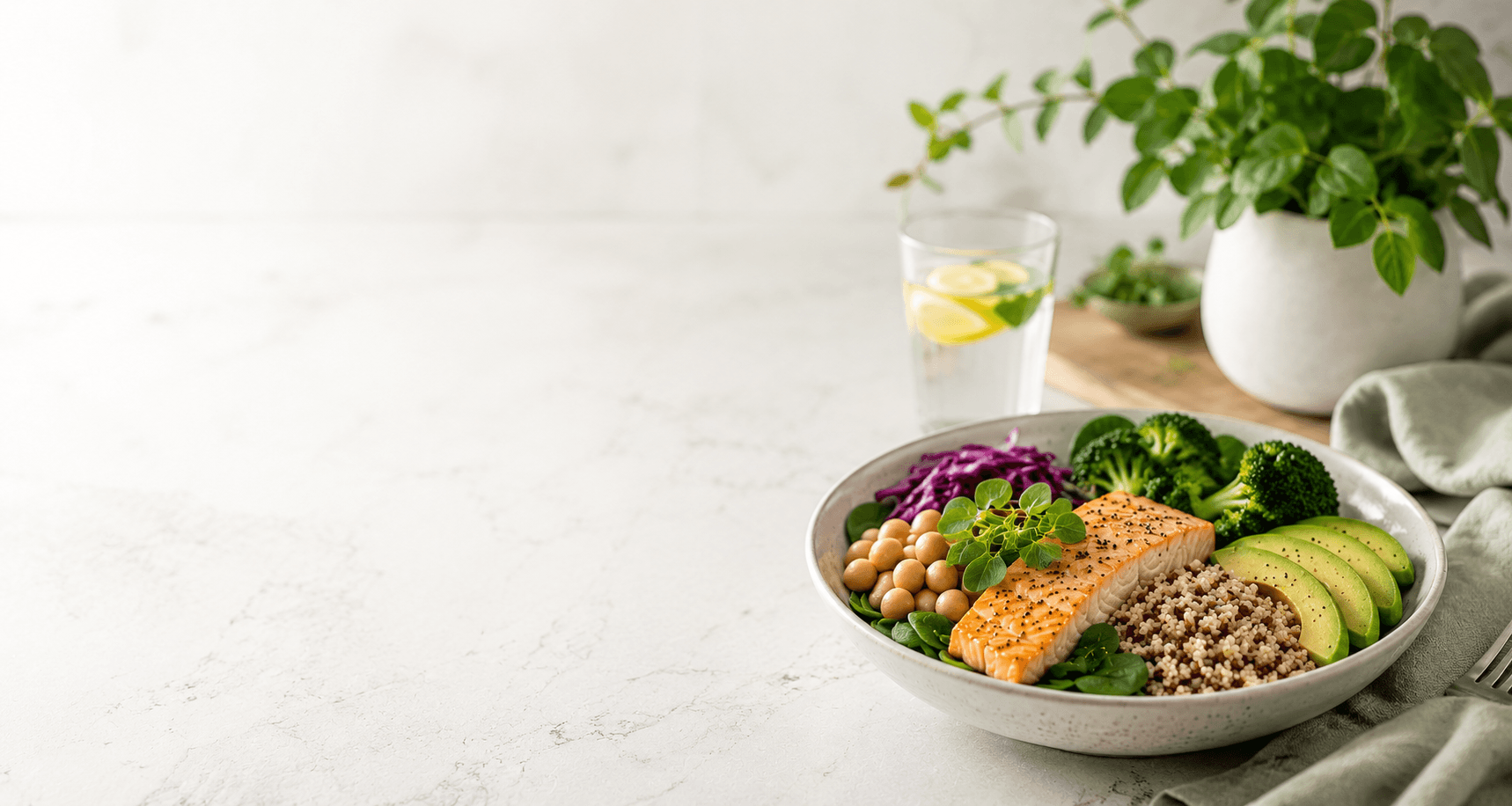
A balanced diet can contain a wide variety of foods.
Depending on your dietary requirements and preferences, your meals might incorporate:
Vegetables and fruit
Providing fibre and a wide range of vitamins, minerals and other nutrients.
Protein-rich foods
Including fish, eggs, meat, beans, lentils, pulses and other suitable protein sources.
Higher-fibre carbohydrates
Such as potatoes, oats, rice, wholegrains and other carbohydrate sources.
Healthy fats
Including nuts, seeds, avocado, olive oil and oily fish.
Dairy or suitable alternatives
Depending on your individual diet and requirements.
The aim isn't to find a collection of “perfect thyroid foods”. It is to develop an overall eating pattern that is balanced, varied and realistic.
Get Personalised Hashimoto’s Diet Support
Personalised Hashimoto’s Nutrition
Your diagnosis may be the same as somebody else's, but your diet probably isn't.
You may work long hours and need quick meals. You might be vegetarian or vegan. You could be trying to manage your weight, or perhaps you have already eliminated several foods and want to know how to maintain a balanced diet.
That's why personalised nutrition can be more useful than simply downloading a generic Hashimoto’s meal plan.
We look at:
What you currently eat → your nutritional requirements → your goals → practical changes
Recommendations can then be designed around your actual circumstances.
Hashimoto’s and Gluten
Gluten is one of the most frequently discussed subjects surrounding Hashimoto’s nutrition.
Hashimoto’s and coeliac disease are both autoimmune conditions, and people with autoimmune thyroid disease have a higher prevalence of coeliac disease than the general population. However, having Hashimoto’s does not itself mean that somebody has coeliac disease.
People with diagnosed coeliac disease need to follow a strict gluten-free diet.
For everyone else, removing gluten shouldn't automatically be treated as a requirement of having Hashimoto’s.
If you are considering a major dietary restriction, it is useful to understand why you are making that change and how it may affect the nutritional balance of your diet.
Do You Need to Avoid Dairy?
Dairy is another food group frequently removed from Hashimoto’s diets.
Again, a Hashimoto’s diagnosis doesn't automatically mean dairy needs to be avoided.
Milk, yoghurt and other dairy foods can provide useful nutrients including protein, calcium and iodine.
If you don't consume dairy because of your dietary preferences or another reason, suitable alternatives can be incorporated into your diet.
The important part is ensuring that removing a food group doesn't unintentionally remove important sources of nutrition.
Iodine and Thyroid Health
Iodine is needed for normal thyroid hormone production, which is why it receives so much attention in discussions about thyroid nutrition.
However, that doesn't mean taking more iodine is always beneficial.
Excessive iodine intake can cause problems for susceptible individuals, and high-dose iodine or kelp supplements shouldn't automatically be added to a Hashimoto’s diet.
Your overall dietary intake should be considered before deciding whether a supplement is appropriate.
Selenium and Hashimoto’s
Selenium is another nutrient involved in normal thyroid function.
Food sources include fish, eggs, meat, nuts, seeds, beans and lentils.
Although selenium supplements are frequently promoted for people with Hashimoto’s, taking large quantities of an individual nutrient isn't automatically better.
Supplement decisions should take account of your existing diet, other supplements and individual circumstances.
Supplements for Hashimoto’s
The market for thyroid supplements can make it seem as though everyone with Hashimoto’s needs a long list of products.
That isn't a sensible starting point.
A better approach is:
Review your diet → identify a genuine requirement → consider food sources → supplement when appropriate
If you already take vitamins, minerals or specialist thyroid products, we can consider these alongside your wider diet.
Particular care should be taken with products containing high quantities of iodine or kelp.
Hashimoto’s and Weight Management
An underactive thyroid can be associated with weight changes, but body weight is influenced by many factors.
Rather than following an extremely low-calorie or restrictive “thyroid diet”, nutritional support can focus on sustainable habits.
This might include reviewing:
- Portion sizes
- Meal structure
- Protein intake
- Fibre
- Snacks
- Drinks
- Overall energy intake
- Everyday activity and routine
The objective is to develop an approach that can realistically become part of your normal lifestyle.
Meal Planning for Hashimoto’s
Knowing what a balanced diet looks like doesn't necessarily make deciding what to eat every day easy.
Meal planning can help turn nutritional advice into something practical.
Your plan can take account of your schedule, cooking ability, food preferences and family life.
This might include quick breakfasts, lunches that can be prepared in advance, straightforward evening meals and convenient snack options.
You shouldn't need to spend every evening preparing specialist “thyroid meals” to improve the quality of your diet.
Vegetarian and Vegan Hashimoto’s Nutrition
Hashimoto’s doesn't prevent you from following a vegetarian or vegan diet.
However, any restricted dietary pattern needs to provide adequate nutrition.
Depending on what you eat, areas worth considering can include:
- Protein
- Iron
- Vitamin B12
- Calcium
- Vitamin D
- Iodine
- Selenium
- Zinc
Advice should be based on your actual food intake rather than assumptions about your diet.
Nutrition Alongside Thyroid Medication
Levothyroxine is commonly prescribed when Hashimoto’s results in hypothyroidism.
Certain foods, supplements and medicines can affect how levothyroxine is absorbed, which means timing can sometimes be important.
Nutrition support can help you understand relevant dietary considerations, but it does not replace advice from the healthcare professional responsible for your medication.
Changes to prescribed thyroid medication or dosage should always be discussed with the appropriate medical professional.
Why Choose Hashimoto’s Diet?
There is already more than enough complicated thyroid nutrition advice online.
Our approach is designed to make things clearer.
Personalised
Your recommendations are based around your existing diet, preferences and goals.
Practical
We focus on changes you can realistically incorporate into everyday life.
Balanced
Food groups aren't removed simply because they appear on a generic Hashimoto’s diet list.
Sustainable
The objective is to create habits you can maintain rather than another short-term diet.
Supportive
Your nutrition can be reviewed and adjusted as your circumstances and goals change.
Online Hashimoto’s Nutrition Consultations
Nutrition support can be provided remotely, allowing you to access personalised advice without travelling to a clinic.
An initial consultation provides an opportunity to discuss your current diet, routine, concerns and objectives.
From there, we can identify priorities and develop practical nutritional recommendations.
Follow-up consultations can be used to review progress, discuss challenges and make further adjustments where appropriate.
Frequently Asked Questions
What is the best diet for Hashimoto’s?
There isn't one diet that is best for everybody with Hashimoto’s. A balanced and varied diet tailored to your individual nutritional requirements is a more appropriate starting point than a universal restrictive eating plan.
Should I go gluten-free with Hashimoto’s?
Not automatically. A strict gluten-free diet is necessary for people with coeliac disease, but Hashimoto’s itself doesn't mean everybody needs to remove gluten.
Can I eat dairy with Hashimoto’s?
Hashimoto’s doesn't automatically require a dairy-free diet. Whether dairy is appropriate should be considered according to your individual circumstances.
What foods are good for thyroid health?
Rather than concentrating on a small number of so-called thyroid superfoods, focus on the overall quality and variety of your diet.
Should I take thyroid supplements?
Supplements should have a clear nutritional purpose. Avoid assuming that a product is beneficial simply because it is marketed for thyroid health.
Can diet cure Hashimoto’s?
Nutrition should not be presented as a cure for Hashimoto’s. Dietary support should complement, rather than replace, appropriate medical treatment.
Start Your Hashimoto’s Nutrition Journey
You don't need another complicated list of foods you're allowed and forbidden to eat.
Personalised nutrition support can help you understand your existing diet, identify worthwhile changes and build an approach that fits into your everyday life.
Get in touch today to discuss your nutrition and take the first step towards a simpler, more balanced approach to eating with Hashimoto’s.
What People are Saying About Us
★★★★★
“The advice was practical and easy to incorporate into my normal routine. I finally felt like I had a much clearer understanding of my diet.”
Rachel Bennett
North West
★★★★★
“I had read so much conflicting information about Hashimoto’s and food. The personalised approach helped me simplify everything and focus on changes that actually suited me.”
Laura Mitchell
North West
★★★★★
“I really appreciated that the recommendations weren’t overly restrictive. Everything was explained clearly and adapted around foods I already enjoy.”
Sophie Carter
North West
★★★★★
“The consultation gave me much more confidence when planning meals and helped me build a more balanced approach that I can realistically maintain.”
Helen Brooks
North West
Start Improving Your Nutrition Today